What the CVE Entry Establishes
CVE-2026-12526 affects Advanced Custom Fields: Extended versions before 0.9.2.7. The disclosure says the plugin fails to properly validate a user's identity before updating that user's password. That missing validation permits an unauthenticated attacker to change the password of an arbitrary user, including an administrator. Once an administrator password has been changed, the attacker can use it to gain access to the administrator account. The reported impact is therefore unauthenticated privilege escalation through administrator account takeover. Khaled Alenazi is credited with the finding. The brief does not identify the affected endpoint, HTTP method, request fields, source path, or patch implementation, and those details should not be assumed.
The Password Update Is the Decisive Security Boundary
This flaw is an authorization and identity-validation failure, not a disclosed malicious-payload vulnerability. The attacker does not need a valid WordPress login before changing a target password, and the password change is what converts the bug into control of an account. The supplied description establishes that administrators are among the possible targets, making the consequence especially severe. It does not establish SQL injection, cross-site scripting, deserialization, upload, traversal, or another request pattern covered by a WAF rule. Nor does it establish a form, API, AJAX route, or other delivery mechanism needed to claim that BitFire Bot Protection directly blocks this CVE. The supported protection boundary is the protected password update itself.
BitFire PRO RASP Blocks Unauthorized Password Changes
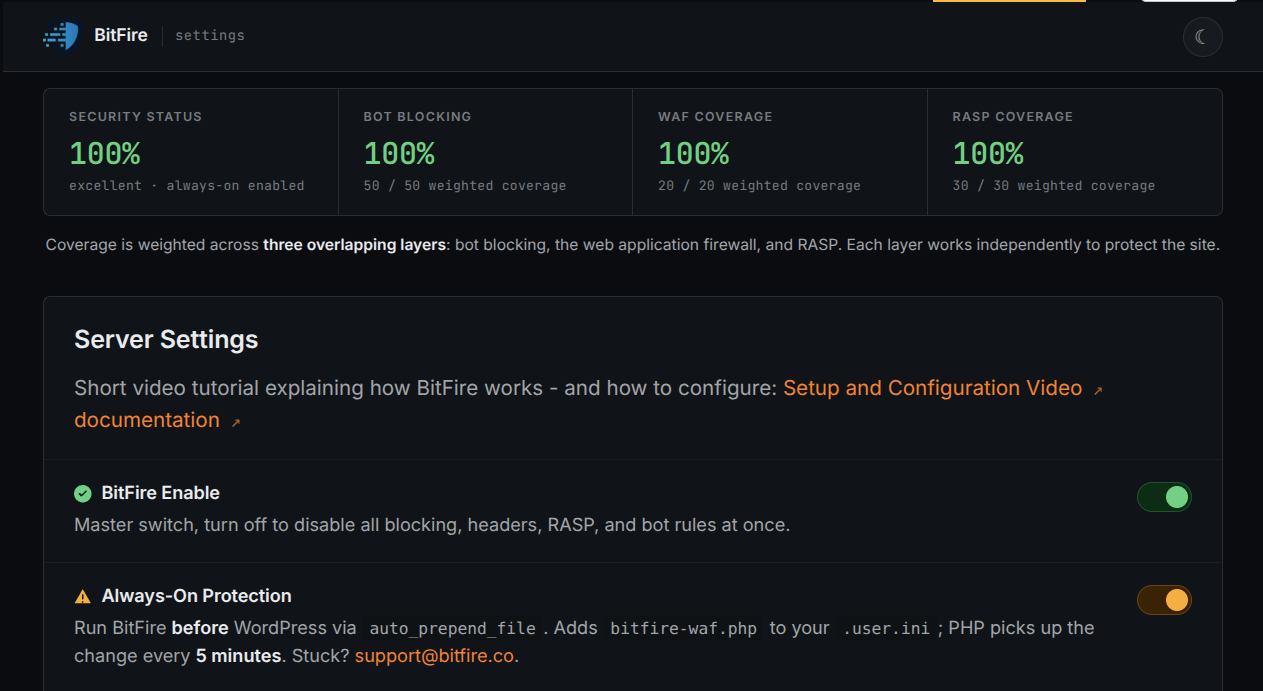
BitFire PRO RASP enforces authorization when WordPress and PHP attempt protected operations. Its database protection blocks unauthorized protected data changes and suspicious writes. For CVE-2026-12526, an arbitrary user's password change is the protected database outcome that enables account takeover. When an unauthenticated request attempts to change an administrator's password without the required authority, BitFire PRO RASP blocks that unauthorized change at runtime. This is outcome containment at the decisive operation: RASP does not patch Advanced Custom Fields: Extended, sanitize an unspecified request, or claim to stop the vulnerable plugin code from being reached. It denies the protected password-change result that the disclosed attack requires to take over the account.
If Your Site Was Affected, Investigate for Persistence.
Update Advanced Custom Fields: Extended to version 0.9.2.7 immediately. Patching closes the known password-update path, but it does not reverse a password change or remove persistence established during an earlier takeover. Investigate any site that ran an affected release, remove every persistence mechanism discovered, and rotate relevant credentials after restoring account control. Run BitFire Threat Hunter to check for backdoor WordPress administrator accounts, hidden database triggers, long-running PHP processes, and droppers that can reinfect the site. Also review WordPress and server cron persistence, must-use plugins, and suspicious database content. The absence of an obvious malicious file does not establish that a previously exposed site is clean.
Limit Takeover Impact and Patch Now
CVE-2026-12526 turns inadequate identity validation into an unauthenticated administrator-account takeover path. Install version 0.9.2.7 to remove the disclosed vulnerable version, and enable BitFire PRO RASP to enforce protected database changes independently at runtime. RASP blocks the unauthorized password change that attackers need for the takeover; Threat Hunter helps determine whether earlier exposure left an attacker account or other persistence behind. Deploy the runtime protection, patch immediately, investigate every previously affected installation, and rotate credentials wherever compromise is possible.